Outdoor Kitchen Materials That Survive NZ Winters
New Zealand isn't an easy climate for an outdoor kitchen. Intense UV in summer, driving winter rain, heavy frosts and salt air if you're anywhere near the coast. Materials that looks great in the showroom can start failing within a couple of seasons if they are not built for the great outdoors and everything it has to offer. Here's what actually holds up, and what tends to let people down.
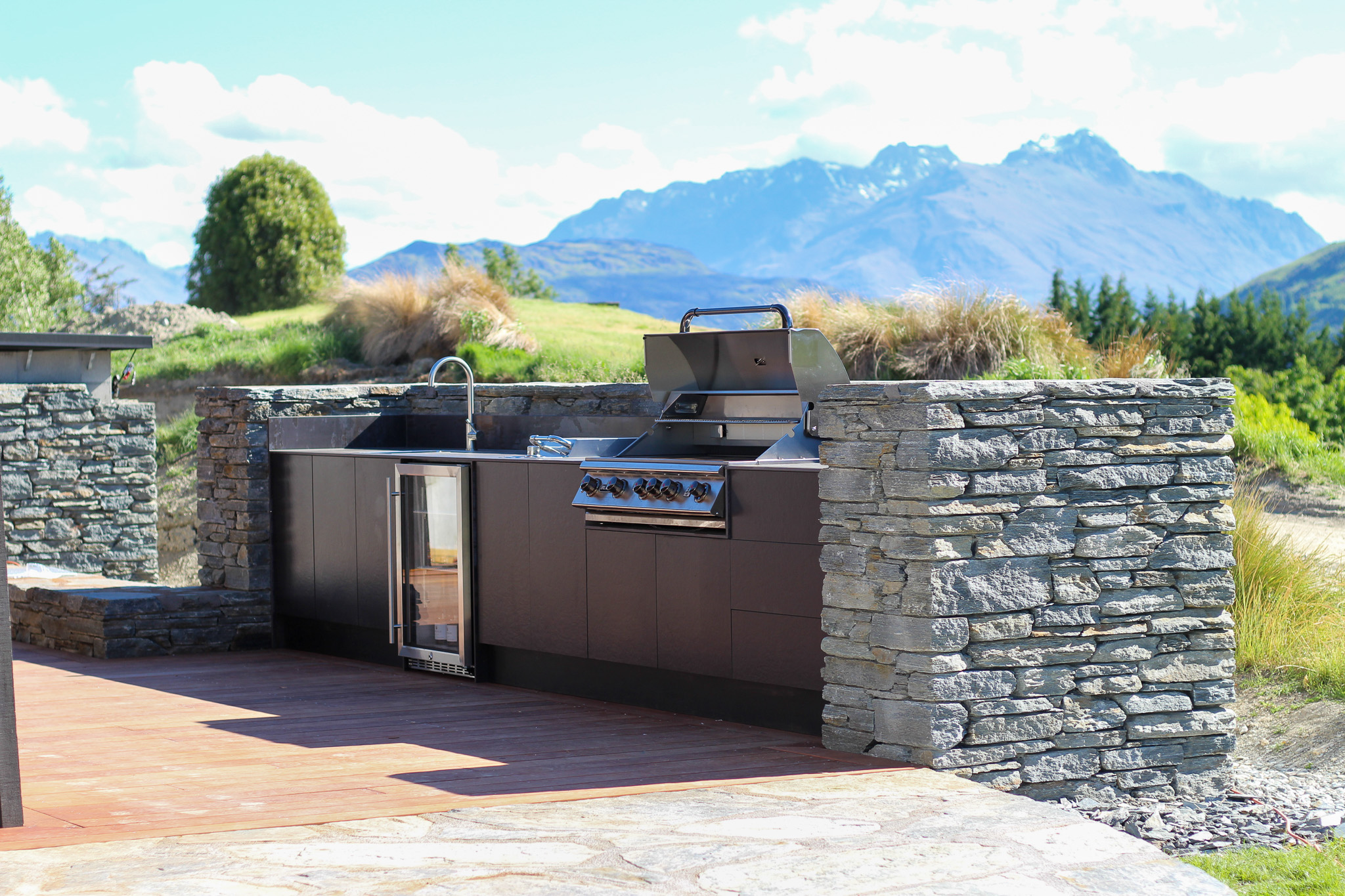
What NZ weather does to the wrong materials
An Outdoor kitchen is much more demanding on materials than an interior kitcehn. Materials used indoors wouldn't last a season outdoors. Exposure to the elements and the requirment for retaining longivity and good looks is what makes outdoor kitchens challenging.
UV exposure: Has the ability to degrade and delaminates some finishes and can causes extensive colour fading over time, New Zealands climate is particualy challenging with some of the highest UV levels in the world.
Moisture :Exposure to repeated wet/dry cycles has a tendency to swell and twist timber. Rain and humidity can also cause issues with metal if it's not treated correctly, rust and unsightly marks on your pavers are one potential issue.
Frost and temperature swings This adds stress to materials and joins. Varing degrees of expansion and contraction is enevitable outdoors. This only becomes a problem when the kitchen design has no allowances for movement, causing joins to open and materials to crack. The kitchen design needs to allow for movement rather than trying to prevent it.
Salt air, if you're coastal, accelerates corrosion on anything that isn't properly rated for it.
What benchtop to choose?
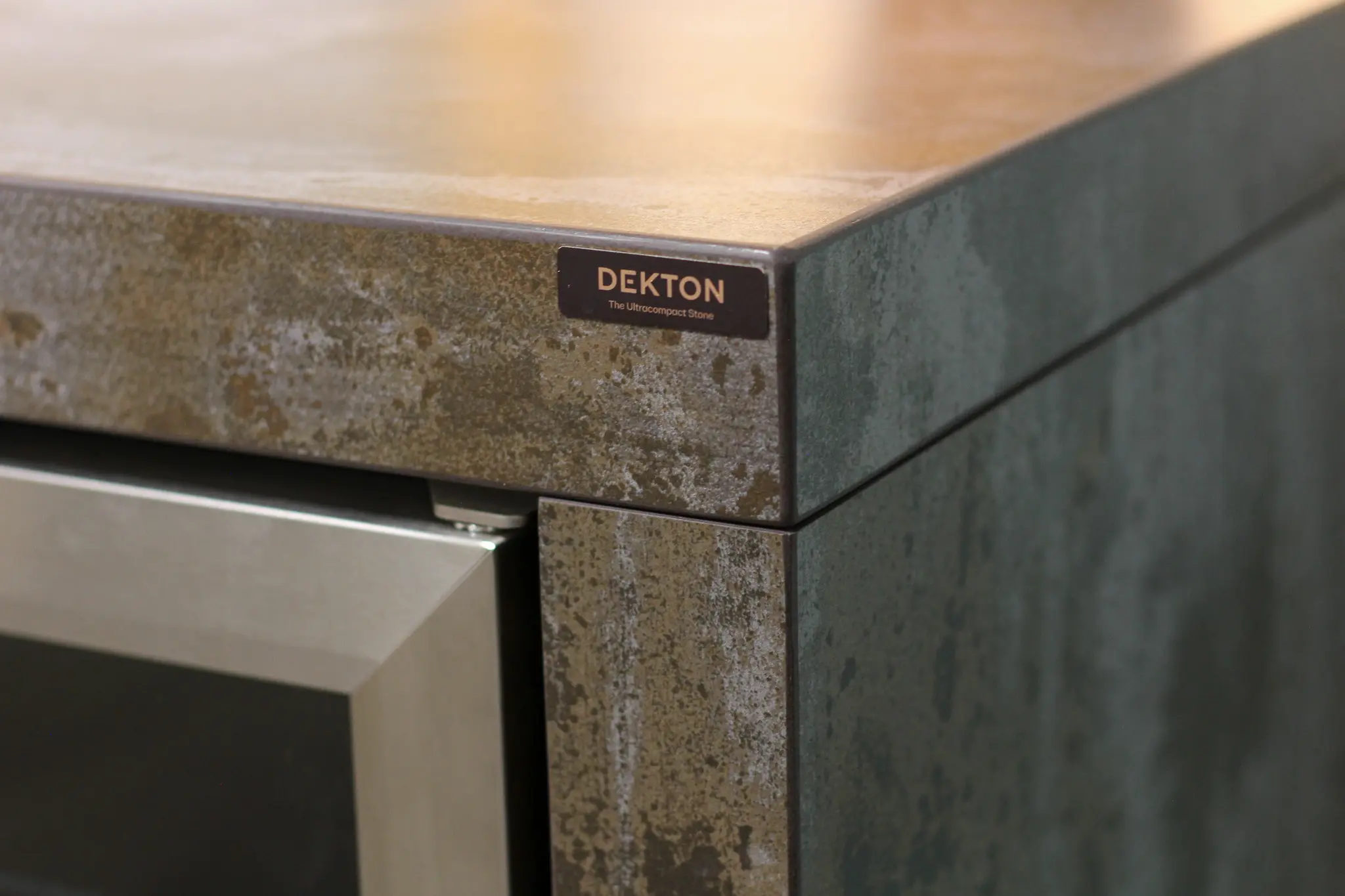
Sintered stone (like Dekton) This is one of the strongest options for outdoor benchtops. It's UV-stable so it won't fade, takes on almost no moisture, and is heatproof enough to handle hot pans or trays straight off the BBQ. It also doesn't need sealing or resealing, which matters over the long run, you're not maintaining it, just wiping it down.
-At wild we use Dekton or in our Trust the cheif, we also have Neolith. Both of these are sinted
Natural stone (granite, bluestone) A good option if properly sealed, and it holds up well to heat and sun. The trade-off is that natural stone is porous, so it needs resealing every couple of years to keep resisting stains and moisture — an ongoing maintenance cost that sintered stone avoids.
Concrete Handles temperature swings well and can be shaped to a custom design, but needs a good sealant (often an epoxy coating) to properly resist UV and staining, and that sealant will need reapplying over time.
What to avoid: laminate and timber benchtops. Both look fine initially but timber will split and grey over time outdoors, and laminate isn't built to handle sustained moisture or UV.
Cabinetry and hardware
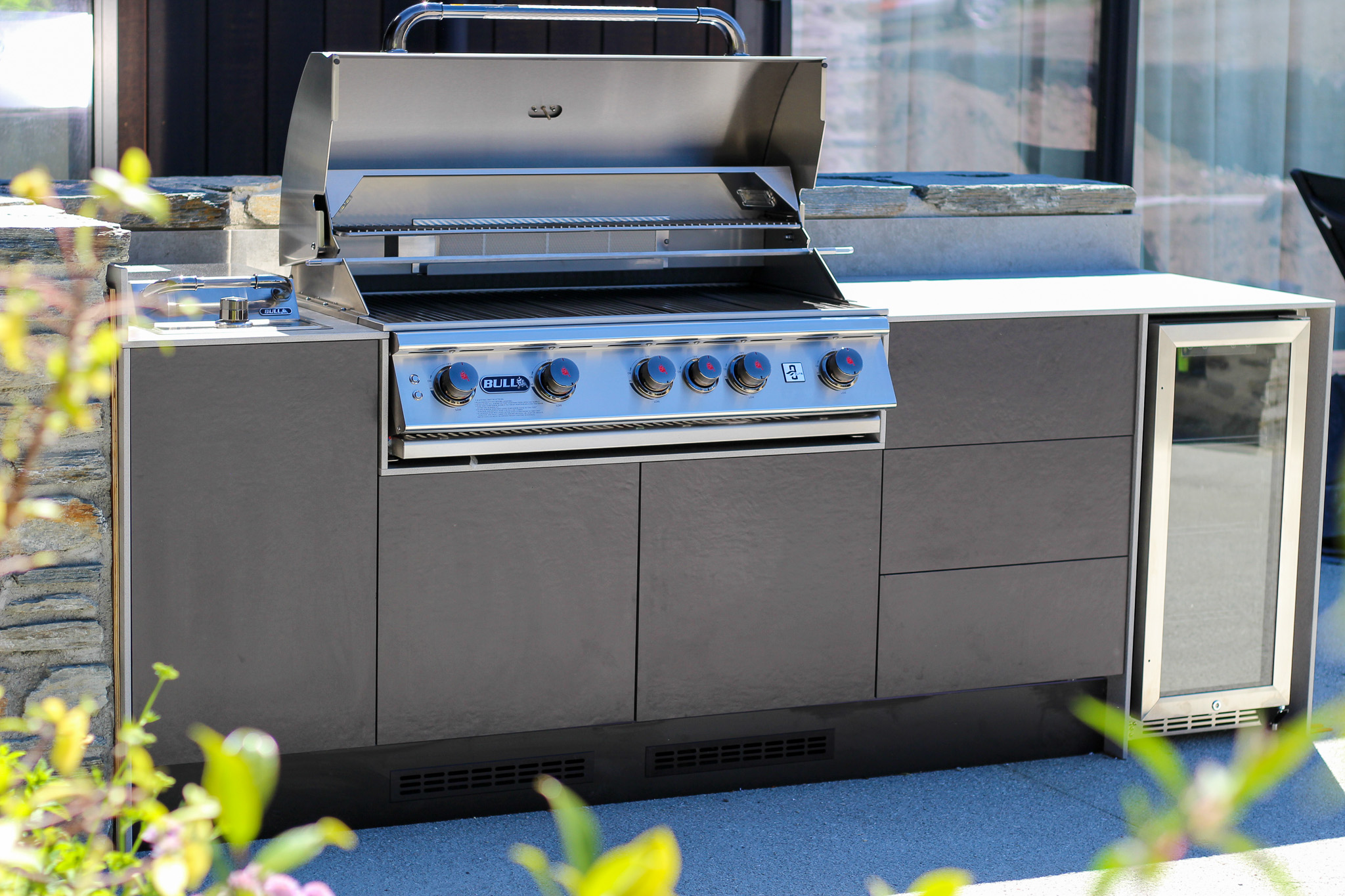
304 stainless steel is the standard for a reason, it resists corrosion, doesn't fade, and holds up to both heat (sitting next to a hot BBQ) and rain without an issue. It's what's behind good outdoor kitchen hardware (hinges, drawer runners) as well as cabinet frames.
Aluminium is a reasonable mid-range alternative, fully corrosion-proof and lighter than steel, though it dents more easily and a powder-coat finish can chip over years of use.
What to avoid: anything built from indoor-rated cabinetry materials. Even "moisture-resistant" boards designed for bathrooms aren't rated for direct rain, frost, or constant UV, they're a different level of protection to what a genuinely outdoor space needs.
Don't skip the small stuff
It's easy to focus on benchtops and cabinets and forget the details, but hardware quality matters just as much for longevity:
Hinges and drawer runners should be marine-grade or 304 stainless — these get the most physical wear and are the first thing to fail if they're the wrong spec.
Power points, if you're adding a fridge or lighting, need to be outdoor-rated.
Drainage around the kitchen area matters more than people expect — water pooling against cabinetry, even weatherproof cabinetry, shortens its life.
The bottom line
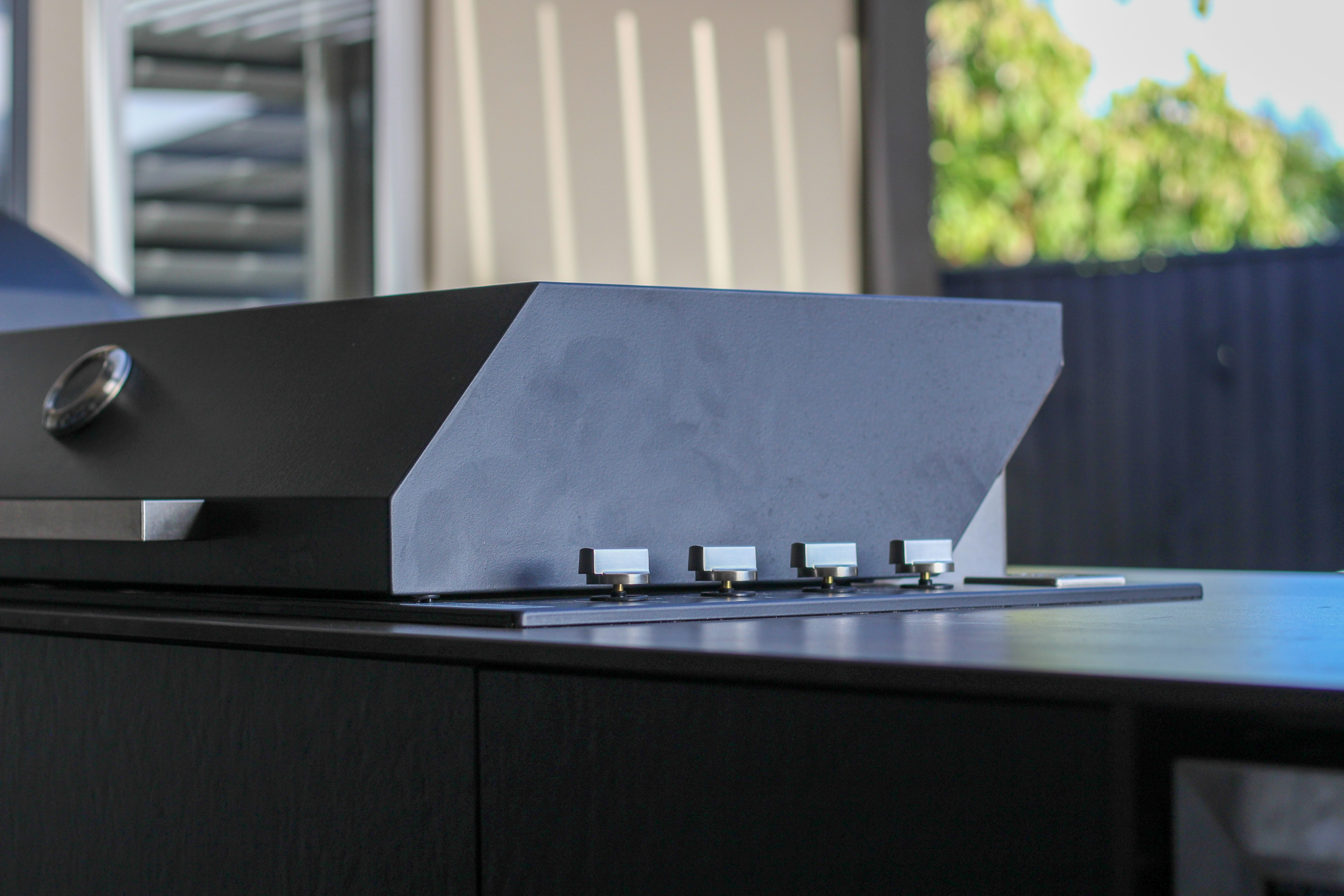
For a New Zealand outdoor kitchen that's genuinely built to last through winter after winter, the combination that consistently performs is a sintered stone benchtop (UV-stable, waterproof, no resealing) paired with 304 stainless steel cabinetry and hardware (corrosion-resistant, heatproof, built for constant outdoor exposure). It's a higher upfront cost than timber or laminate, but it's also the difference between an outdoor kitchen that still looks and works like new in ten years, and one that needs replacing in two or three.
Every Wild Kitchen is built with a Dekton sintered stone exterior and Hettich Alfresco hardware for exactly this reason, designed for New Zealand conditions specifically, not adapted from an indoor kitchen spec. If you want to talk through what'll hold up best for your particular spot, coastal, exposed, sheltered, whatever your situation is, get in touch and we'll talk it through.